Showing posts with label craft. Show all posts

Wednesday, July 8, 2026

Smoosh Face Food Hole


In a hot and heavy kissing scene, lips, mouth, and tongue end up getting used too repetitively. The problem is, there are no good replacement options: 

I just wrote this as an example: 

    His lips skimmed down her throat, and he pressed a hot kiss to the pulse there. His mouth and tongue left wet trails along her skin. Missing the heat of his kiss, she shivered at the chill left in its wake. She turned her head, desperate to press her lips to his – and he pulled away with a chuckle. 

    “Love, do you want my mouth?" 

    “So much. I need your kiss. I need to feel your lips." 

    “And my tongue?" He asked, skating his hand down her torso. 

    She arched into his touch, desperately needing more. "Yes, I want your lips, mouth, tongue – all of it. Now.” 


 Okay, so let’s switch it up to be less repetitive. 

    His lips skimmed down her throat, and he pressed a hot kiss to the pulse there. His mouth and tongue left wet trails along her skin. Missing the heat of his puckered sucking motion, she shivered at the chill left in its wake. She turned her head, desperate to press her face labia to his – and he pulled away with a chuckle. 

    “Love, do you want my oral cavity?" 

    “So much. I need your smoosh face. I need to feel your mouth flaps." 

    “And my lingua?" He asked, skating his hand down her torso. 

    She arched into his touch, desperate, needing more. "Yes, I want your face pillows, your food hole, your licky thingy – all of it. Now.” 


That was fun. And, on that, back to writing.

Thursday, July 7, 2022

Consent in Romantic Fiction

Romance is ultimately about two people finding love against all odds and living happily ever after. That has been consistently true throughout the evolution of the genre.

What has changed is the idea of what is sexy. I'm going to go out on a limb here and make a blanket statement that assault is not sexy.

The alpha male was the ideal romantic character. Add the Byronic, emotionally-damaged element and he was the man a reader could fantasize about healing. He was physically powerful, sexually more-than-proficient, and unreachable... until that one special woman healed him with love. One problem with this is the fantasy that a good woman could change a man. Another problem is that he usually was so sexually overwhelming that the woman couldn't help herself.

One theory for this standard in romance (60-70s) was the idea that a woman was not empowered to say yes. If she wanted a sexual experience, that made her dirty. The pseudo-rape by the alpha male took her accountability away. She said no, but her body said yes. Wait, did I say pseudo-rape? How understated of me.

Another theory for the alpha-male fantasy was, as women became expected to be the super-executive+super mom in the 80s-90s, they fantasized about not having to be in control of everything. The idea of being taken, of ceding control, was a fantasy for a different reason than worrying about being considered immoral; it was backlash about being asked to be too much all at once. These books are borderline rape-fantasy books. The first explicit romance novel I read, when I think back on it, removed all sexual agency from the heroine. It's sad that this is what started my own evolution and is still there, hovering in my subconscious, tainting my understanding of self with guilt and shame. Good times.

My point:

Romance norms have changed drastically in the last ten years. The alpha is still there, but he's more emotionally available and has respect for women. He listens when she says no, or wait. He doesn't bully his way through. It is a relationship of equals and of equal choice. It's awesome. 

I recently have been going through a well-known author's backlog of books (I do that, find an author I like and read everything by them). I'm back about ten years and came across a seduction scene that made me cringe. It was the alpha male asserting himself and seducing the unwilling heroine with a searing kiss. Unwilling. The minute she said stop, don't touch me, that should have ENDED THE SCENE. The fact that he continued made me instantly hate him. She. Said. No. No means no, m*th*rf*ck*r. The book did not get worse along those lines, but he was already ruined. He was probably intended to be an alpha-male, but I saw a bully and could not get past that. He punished her with pleasure. Yuck.

The 2nd book in that series involved the man's twin brother.  He was confident and funny. He was in no way a pushover, but when said enough, he stopped with no questions asked. That was respect. Super sexy respect. He may be my new book boyfriend.

I felt like these books represented the shift in expectations within the community of romance readers. Book 2 was published in 2010.

After looking into this I checked on another author  I like (I had done much the same thing as I went through all of her romantic suspense and then backtracked into her historical series). All her current books have respectful relationships with give and take instead of just taking. However, her historical novels meet the standard of the alpha male. When did this change? 2009.

I did not start this blog post as a treatise on the evolution of romance. I wanted to point out the changing values when it comes to a woman's sexuality. Romance mirrors the reader's romantic fantasies and is a reasonable way to look at how generations of readers view their own role in sexual interactions. The changing dynamic of seduction in romantic fiction tells me that readers respond to consensual interactions. The beta-man used to be the alpha's side-kick, but now he's the more desirable partner. He listens.

All of the romantic heroes I write would have, 20 years ago, been considered the beta side-kick to a more dominant alpha. I write about a couple finding each other. She is not his property. He does not belong to her... they belong together. You cannot get that partnership without equality and there can be no equality without consent in the relationship. That said, I just wrote a scene where he tells her to wait, that he's not ready... and I vacillated on whether or not she would listen or power through, seducing him. OF COURSE she waited. She listened. They couldn't be equals if she didn't. No double standards.

Have you noticed a change in the way relationships are written in romantic fiction? What do you think spurred this change? I am interested in your answers.


Note: I do not "cancel" authors who do not meet my ethical standards. If I don't want to read them, I don't. Easy. Standards have changed over the years. The first book I mentioned  that had the alpha-male, I know that to be a product of the system and the era. Had I read it when it was first published, I may not have even noticed the problem. I did not mention author names because I do not want to contribute to any do-not-read lists. They are good authors who continue to produce good books. When I read scenes in older books, I may think to myself that it wouldn't be published today... but neither would many books and movies we think of as classics.

Wednesday, July 10, 2019

Courtly Scandals: Abortion

When I started Courtly Scandals, one of the defining parts of Mary's life was her abortion.

The story grew as she struggled with forgiving herself, not because of any philosophical discussion of right or wrong, but because she'd wanted that baby and hadn't been strong enough to defy her father. Opposite to today's definitions, she had no right to chose what to do with her own body because she another person demanded she have an abortion.

I changed the story at a well established author's advice: she said I would alienate readers over a controversial issue. It made sense to me, but I wanted to keep the meat of the problem. It was integral to the story. I changed it to have her lose the baby in a traumatic accident before going through with the abortion. The choice was taken away from her but she still blamed herself for not being strong enough to stand up for herself and mourns what might have been. In the scene where she shares her story with Blanche Parry,  Blanche doesn't bat an eye because it's not a unique situation, but that doesn't change how Mary felt about herself. Mary, that was her moment of no return. Rational or not, a feeling of guilt was true for her.

Whether a reader was pro-choice or pro-life I had hoped that they could accept the struggle to come to terms with trauma from the past. Mary's personal journey was to learn to love herself and realize she is worthy of love. Part of that involved her being able to forgive herself, right or wrong, and move forward with a sense of hope. Personally, I believe there are things in everyone's lives that they have to either ignore or to forgive themselves for everyday. They may have nothing to do with varying ideals of morality or law, just choices from the past that each of us have to live with.

I have had varying responses and ended up alienating readers anyway. The moral of this story is that you can't please everyone. All readers have their own filters and I can't control that. I can just tell stories and stand behind them. I don't regret putting Mary on this journey. As an author or historical romance I like to link the past with present and show that the people that paved the way for our society were not that different from ourselves, that nothing is new.

Thursday, July 26, 2018

Celebrating Successes

By the time Courtly Pleasures was released I was thick into edits for Courtly Scandals. My husband wanted to have a release date party but it was on a Monday and it was my Mom's birthday and the kids had dance class... can we do it later? Or maybe after the series comes out?

We never did it and I didn't mind. I felt weird about celebrating myself, especially when there was so much to be done.

Fast forward six months to the 2018 Romance Writer's of America national conference in Denver and there I sat, at my first conference as a published author, feeling just as awkward as I always had. Not much had changed. I was still working toward whatever was supposed to come next but, unlike that first conference years ago, it was without a sense of joy. Instead I was stressed out about the books I haven't written yet and needed to write yesterday.

What happened to me? I should be more excited, more innovative, more confident and productive... right?

I was in a workshop given by Rosanne Bane about ways to get past writer's block and had a moment of personal insight. The entirety of her workshop had to do with the physiological function of the brain and the way it responds to stress and, in turn, the way we, as writers, respond (usually by creatively shutting down). She gave a list of better brain responses and the way to train myself to shut down my limbic system response and get back into the creativity of my cortex. The PowerPoint is available to you here.

Her points were easily understandable, the solutions reasonable, and I have already started to change my approaches to self care.

One point she made, more of a side note in the section about the lateral habenula (the teeny tiny section within the limbic system that decreases dopamine) was to follow through on rewards. She advised us to set incremental goals with corresponding rewards for goal completion. I never did this because I was always too busy with the next step. How simple would it be to take the time to pause and congratulate myself?  To be proud and excited and feel successful? Instead I jump right back in and feel only the weight of everything else left undone.

I should have celebrated that contract and the first round of edits. I should have celebrated the second and third round of edits and the book cover. All of these milestones along my journey deserved a moment of acknowledgement. I deserve to acknowledge my own successes as they come. Writing a book, following through, publishing... all of that is hard work and I wouldn't do it, couldn't do it, if I didn't believe in myself. I don't know if it's false humility or that I'm just an absolute buzz-kill, but I feel guilty being proud of myself and celebrating myself and I think it has put a big fat damper on my joy about my craft.

SO...

I'm going to set goals (baby-steps) and celebrate myself when I achieve them. I don't think it's a carrot on a stick--I think it's allowing myself to write without worrying about everything I could be doing better and just do it. After all, If I'm not writing forward, I'm accomplishing nothing. So huzzah for me.

Current goal: build sexual tension between my main characters (which is rough because she just had a baby and had been abandoned by her husband before she even knew she was pregnant). It's easier said than done because every time I write, she gets irritable and irrationally suspicious  Once I accomplish this I will get a pedicure as a reward and celebration.

Do you reward yourself for goal completion?


***Note 8/5/18: I finished the chapter that I was struggling with in regard to building sexual tension and then I did NOT go for the promised pedicure because I felt like the reward was bigger than the goal and added a new section to the goal (to lay the foundation for a future conflict) and have not been able to write anything since. I think I need to 1. get that pedicure and 2. make sure my rewards are of like weight with the goal. In this case I should have promised myself a cookie.

Monday, June 18, 2018

Summer!

I am a teacher from a family of teachers and having a summer break is the norm for me. In my young adult life, pre-teaching, it was reality check when I had a serious job and had to work year round. As a teacher, I really do need the summer or I wouldn't be able to face my new batch of students with a sense of optimism. I teach middle school and the kids test my limits each day and, every morning, I start again by giving them a clean slate and a chance to make good choices about kindness, self-respect and respect for others, accountability, honesty, and character. Sometimes they do. By the end of the year I'm a hairsbreadth away from my spirit being broken and I need the summer to emotionally heal and put me in the right mind-set to start that challenge all over again.

The good news is that  my school year is finally finished. My class is clean-ish and packed up. I have put the polite auto-response on my school email. This means the summer is MINE. From now until August 14th (which, coincidentally, is my birthday) I am free. Sort of.

During the summer I am a real writer. Writing becomes my job, not just something I squeeze in around everything else. It's great for my acceptance of myself as an author, to have that time where I can take myself more seriously. It's not just a hobby. It helps that the Romance Writers of America annual conference is in July. It gives me a professional goal to work toward which keeps me on my self-imposed deadlines and makes me wear pants. This conference I hope to find a home for my Courtly Love book 3, Courtly Abandon. I will not be signing this year, but I look forward to seeing many of my peers (and taking home oodles of books). The first book of my new series won't be finished, but I'm laying a fertile foundation with my setting and my characters are slowly becoming themselves and starting to tell me their story. Surprisingly, I even wrote a synopsis (blame my critique partner for making me organized) which is something I usually struggle with after the book is finished. It's my hope that the finished manuscript resembles my synopsis, but I never really know what direction my characters will take me. It's a mystery.

I hope you have a great summer. My family and I will be visiting Ireland next week. I lived there as a child. It's been thirty years since I've been there and I can't wait to share it with my husband and daughters. I'll include some pictures in my next blog post. The image below is of me and my brother (circa 1986) in the wood at Vienna Woods Hotel in Glanmire, Co Cork.


What are you doing this summer?


Friday, June 1, 2018

Sneak Peak at Courtly Abandon

Courtly Abandon, book three of Courtly Love, was scheduled to be released by Crimson Romance in July. Due to the kerfuffle (to put it lightly) with Simon & Schuster, that has been cancelled. The good news is that the rights have been returned to me and I'm currently working toward getting it placed with another publisher. I am optimistic it will happen. Eventually.

Courtly Abandon is the story of Mistress Jane Radclyffe, one of Frances LeSieur's gentlewomen companions. Jane is a firecracker. She knows herself and what she wants. Jane's journey is, perhaps, the rockiest on a personal level because she never considered her real motivations toward her objectives. Out of the three Courtly Love books, Jane's story is the most honest love story. While it has moments that go past silly and right into ridiculous (I can't help myself) it has equal moments of joy, pain, hope, and the strength to grab on to happiness and not let go. There is no lurking bad guy (the bad guy(s) is/are right there, in your face), no intrigue, no conspiracies, no mystery to solve - just good, bad, and in-between courtiers in the country and the shenanigans that ensue.

Here is a sneak peak at the opening chapter of Courtly Abandon.


Chapter One
Holme LeSieur, Nottinghamshire, 1573

If being ladylike meant wearing corsets everyday, Jane would just have to suffer through it. Even in one of her less ornate courtly gowns, a wool dress more suited to her station, she had to wear the full ensemble complete with corset, bumroll, and farthingale. Given the confines of fashion, this was as comfortable as it was going to be. At least the wool was fine and the moss green dye even and smooth. Of all the gowns she bought when she visited Queen Elizabeth’s court at the end of last summer, this was the plainest, but even this one was trimmed in rich forest velvet. It seemed silly to get done up for a dance lesson but if she wanted to get used to movement in courtly gowns, she had to actually wear them.
She locked her chamber door behind her, tucked the key into her bosom, and practiced walking gracefully down the corridor. She imagined herself gliding, her hem just dusting the floor. Instead her legs became the clapper for the bell of her skirts. If she bent her knees a little with each step and tucked her hips forward, her skirts did not sway so much. Walking like this must make her at least an inch or two shorter—at barely an inch over five feet, she did not have much height to spare. If ladylike decorum meant shrinking, she wasn’t sure it was worth it. Cursing at her self-defeating attitude, she continued to put one awkward foot in front of the other. The woven rush mat covering the floorboards seemed to go on forever.
“Mistress Jane!”
The high squeal was the only warning she had before little Elizabeth LeSieur barreled into her arms. Luckily, Jane’s somewhat crouched walk gave her the stability not to fall flat on her back. She settled herself and shook out her skirts to fix the hem while Elizabeth babbled excitedly.
Elizabeth, what has gotten into you?”
She was gyrating in place. “Mother has brought in a new tutor. Master Percy is a gentleman and able to give dance instruction in the Italianate mode. I met him yesterday and he helped me learn a song. But today we are dancing!” She twirled once more and the ribbon slipped off the end of her braid.
Pausing only for a moment at the name, Jane picked up the ribbon and gestured Elizabeth to stand before her. Percy was a common enough name among the gentry—besides, what would her Percy be doing as a tutor? A dance instructor, no less! “You have had dance lessons for years.” She replaited the errant strands and fastened the ribbon.
“Yes, but only in country and French. The French dances are so boring. These new ones, the Italianate ones, those are what the ladies do at court.” Elizabeth did a series of mock steps in a circle that was probably intended to look courtly. “Mama says if I am to be a lady, I must know the dances. She told me to make sure you joined in—that you need the practice.”
Jane groaned inwardly. She’d had that same lecture from Frances herself.
“Well then, let us march forth and meet our fate.” Jane took Elizabeth by the hand as they reached the stairwell. “Today we shall both continue on our quest to become proper ladies.”
Elizabeth giggled and hopped down the steps, two feet at a time. “Oh Mistress Jane, you cannot be a lady. You are my friend.”
“You have no idea how correct you are.” Jane smiled as she stepped onto the landing of the second floor and crossed the broad balcony to turn and head down to the first floor. Midday light poured through the long, narrow windows, sending shafts of sunlight to guide their way to the main hall.
Together, they pushed open the heavy double doors leading to the massive room at the center of the great home. The great hall served for banquets, as a ballroom, and for tenant meetings with the magistrate of the Nottinghamshire, Master Henry LeSieur. The polished oak floors were usually covered in braided rush mats, but in honor of the dancing lessons, a quarter of the room had been cleared. For the first time, Jane saw how Holme LeSieur could indeed host visiting nobility. Perhaps Frances’s house party idea would be a great success.
“Ladies, pray sit you down. The fiddler will be joining us anon.”
At the sound of his voice, Jane’s eyes flew to the young man sitting by the massive fire place. He rose and walked toward them, as proper as a gentleman scholar should be. Stopping to reverance, he shifted his weight back and lowered himself on the one leg while presenting the other forward, his slippered foot pointed and his calf taut beneath the fine wool of his hosen. Hat over his heart, he met her eye without any sign of recognition.
 “Mistress Radclyffe, I am Master Percy Mortimer. I will serve to tutor you in dancing for these next weeks.”
Jane stood rooted to the floor, her heart pounding in her throat. Percy was here! She swallowed and remembered to breathe. Somehow she found the presence of mind to reverance in turn, acknowledging a respectful meeting of equals. “God give you good den, Master Percy.” Her voice was barely a whisper. “What would you have of us?”
He directed them to sit on the chaise before the fire and began talking about something. Dancing.
God’s blood, what was Percy doing here? Why hadn’t anyone told her he was here? Why hadn’t he sought her out?
She sat in stunned silence, just staring at him while he continued his discussion about… French bransles. How could he talk about dancing at a time like this?
He had changed so much; he was bigger now—a man. Still, with those thick sandy lashes and the serious set to his jaw, she would recognize him anywhere. She had not seen him since her marriage five years ago, since the day he told her he loved her…
How could he talk about dancing at a time like this?
Well, he was the LeSieur’s tutor—he was doing his job. Wait, why had he become a tutor?
“Mistress Radclyffe, are you well?”
Jane looked up into Percy’s heavy lidded, hazel eyes. His face was so close, she wanted to reach out and drag her fingertips across the hint of shadow on his chin, down his neck, beneath his proper pleated collar. His tawny curls, tied back, secure under his velvet cap, showed no hint of sun kiss the way they used to. He had always been serious when it came to scholarship, but the intensity in his eyes made her step back. After all these years... and here he was.
She wasn’t sure if she should laugh or cry.
“You have surprised me, Mistress Radclyffe. I would have thought you more in control of yourself. After all, you are a grown woman. Married once, soon to be married again, if I hear correctly.”
            Just as tall, but no longer lanky, his broad shoulders dwarfed her in a way that made her feel vulnerable. She had always been safe with Percy, the Percy she knew years ago. This was a man she’d never met before and she felt anything but safe.
“Pray excuse me, Elizabeth. I am not well.” She rose as gracefully as she could. “Master Percy, I thank you for your concern. Allow me to bid you welcome to Holme LeSieur. I am sorry, but I must postpone this dance lesson. I look forward to meeting with you another time.” She babbled as she rose and left the room, uncaring about the sway of her skirts.
Percy was here, handsome as ever. Eloquent, educated Percy. She had never understood what he had seen in her back then, but one thing was clear—he did not love her any longer. During everything she had endured over the past years, she had clung to the knowledge that he loved her.
She didn’t know if she could handle the next steps of her life without the comfort of that thought.
*
Percy cleared his throat, hoping the lump there would dissolve. Seeing Jane again after five years had been harder than he had anticipated.
“Master Percy, when can we learn the newer dances?”
Percy smiled at his young charge. She deserved his attention. “When I know you understand the subtlety of the old. The break between the steps is a full stop, a rest. You are, ever so briefly, no longer in motion with no thought that you will move. But then you surprise yourself and you do move. Try to discern the difference.”
He could tell from Elizabeth’s expression that she saw no difference. Ah, well, she was only seven.
He had last seen Jane at her wedding ceremony. Her parents had arranged the marriage with the neighboring landowner. Jane had done what she was told despite the fact that she said she loved him. But then, why would a gentlewoman run away with him, a third son with no hope of inheritance, when she could be lady of the manor? She’d told him he lived in a fantasy and married that old man as if to spite him.
He’d left to finish university within the week and never saw her again. A couple years later he’d heard that old Howard Radclyffe had died, but he refused to wonder what had become of Jane. She had made her decision.
Then again, could she really have chosen him? At sixteen she was still in her minority and would have required her father’s blessing to marry. He’d been only nineteen himself.
He knew, with his rational mind, that she had made the smart choice. That didn’t mean he could forgive her for breaking his heart.
The years had only made her more beautiful, if not any taller. Little Jane, elfin and full of laughter, so tiny he could rest his chin on the top of her head. Petite, or not, there was no denying she was a woman—of course, stylish court dresses showed much more than the gowns she used to wear. Though still sweet, her face had more angles, more personality than the childish softness he remembered. A vibrant blue, her eyes stood out beneath her gold brow and lashes. She had this habit of biting her full lower lip when she was nervous. It always drew his eye. If it weren’t for that involuntary expression, he might have thought the Jane he knew was gone entirely, lost behind perfectly coiled hair, courtly attire, and refined manners.
For all that she was bundled in a courtly gown, she vibrated with an energy he had never understood. His Jane longed to be outdoors, to live life instead of sitting and waiting for the appropriate moments. But she wasn’t his Jane any longer. No, she was the widowed Mistress Radclyffe and in the market for a new husband. She had fully accepted the role of a lady. Did she even remember the wild daughter of the forest she once was?
He should have thanked Mistress LeSieur for the position and then made his apologies and left the minute he’d heard Jane lived here.
 “Master Percy, am I not doing it correctly?” Elizabeth’s plaintive voice broke through his musings. She wore a worried look and was continuing her double bansles in a circle, clearly trying very hard to make the pause between sets obvious.
“I am sorry I got lost in my musings. I did not mean to ignore you.”
“Oh, you were ignoring me. That is much better than being cross. You looked as if you were angry.”
“Again, my apologies. I am not angry with you.”
“Are you angry with Mistress Jane then? I am sad she had to leave—she looked so lovely in her dress. I wanted to see her dance. I never knew she was a lady.”
“I am not angry with anyone, Mistress Elizabeth. Now, you have done quite well. We will resume dancing on the morrow and learn about the meaning behind the Italianate steps.”
“They mean things?” Elizabeth’s bewilderment clear in her voice.
“Oh, yes.” Percy continued, lowering himself to his haunches, eye level with his young charge. “Italianate dances tell stories. Each step means something different and all the steps work together toward a grand ending. Some stories are funny, some make no sense…”
“Why would we tell a story that makes no sense?”
“Why, are you never silly? Some of the great choreographers played subtle jokes on the dancers and the courts throughout Christendom with dances that built upon themselves only to end in a fizzle.”
“But that’s not funny.”
“If you know the meaning of all the steps, it can be.”
It was clear Elizabeth did not agree, but it did not matter. Percy stood again. “So tomorrow we will study some of the poetry from Classical Greece, then see how those poems and poets fit into modern dances.”
“Am I dismissed?”
“Until tomorrow, Mistress Elizabeth.”
Percy gestured Elizabeth to stand after her elegant reverance. She would make a wonderful little lady someday. She was already being molded into a noble ideal. She would wed an earl, or at least a baron, of her parent’s choosing. She probably already had ingrained beliefs that title and wealth were the most important things in the world.
Perhaps they were. Perhaps he was the one with a skewed perspective. Too idealistic for his own good, he would have walked across fire for one kiss from Jane. Moved mountains. Love made everything possible—or so he had believed.
Elizabeth left the room, the soles of her soft slippers not making a sound. Percy concentrated on thinking through tomorrow’s lesson as he dragged the segments of rush mats back into their proper place.
“Master Percy.”
The authority in Mistress LeSieur’s voice stopped him short. He turned and gave a low reverance. “Mistress LeSieur, we have just finished our lesson.”
Was it his imagination or did she linger longer than usual before gesturing for him rise?
“So I see. I also noted that your lesson consisted of Elizabeth dancing a double bransle by herself for more than ten minutes while you scowled.”
“I beg your pardon Mistress, but I did not scowl…”
“You scowled. And then you dismissed her early.” She stepped into the room, toeing one corner of the woven rug into place. “Your credentials are impeccable. Thus far you have shown both skill and intuition in tutoring my daughter. I have been very impressed.”
“Thank you, Mistress LeSieur.” Percy almost reveranced again, then thought the better of it.
“I was impressed until now. What made today so different?” She had hired him on the recommendation of her mother, but he had no idea how far to trust that loyalty. She had been courteous with him so far, but he hadn’t determined whether or not she was a kind woman.
She sat on one of the benches flanking the wall and smoothed out her skirts, waiting. He offered no immediate answer and she let the silence endure, reminding him of one of his more severe professors at Cambridge.
“I have a prior association with Jane… Mistress Radclyffe.”
The blunt truth was out before he could question whether or not it was a good idea.
For an instant, there was a look of concern upon his employer’s face. “Jane.” She was silent a moment longer before asking, “Pray expound.”
“Years ago my parents sent to me live with Baron Stratham and his family in preparation for going to University. They had a son of similar age and an excellent tutor. They live just east of the Ormondes in Somerset.”
She grimaced, breaking her gaze from his to straighten her gloves. They must have been badly askew given her effort. “My own son, Robert, is currently being fostered with my step-sister’s family.” She cleared her throat and met his eye once more. “I will see him again at midsummer, then he will attend Eton in the autumn.”
“It is a blessing that he is able to be with family during this transition.” He couldn’t be sure, but her eyes looked somewhat softer.
Her smile seemed softer this time. “And her husband, Master Radclyffe? He was local as well, yes?”
“Master Howard Radclyffe. His property all but encompassed Taunton Cross Park, the Ormonde’s estate.” Percy paused for a breath. “I met Mistress Radclyffe when she was thirteen, three years before she married.”
“I am sure she was quite an… energetic, young lady.” What Mistress LeSieur did not say spoke volumes.
“She was high spirited, yes. But she was very young.” The image of her laughing, skipping through the tall grass as he strummed his lute. The lips that he had never kissed curved in a smile that said more than she had known. What was she now? “She was an innocent girl.”
Mistress LeSieur raised an eyebrow, but did not naysay him. “You did not pay court to her?”
“I could never do so formally. Her value was in marriage, and I had no prospects at that time but to find some sort of gainful employment, like tutoring, after my schooling. Her father would not have accepted me.”
“Ah, but would Jane?”
She had seen right through him. “No. After everything she chose to marry old Master Radclyffe.”
Mistress LeSieur was silent for a moment that stretched on toward eternity. Percy had nothing else to add and would not let her silence goad him into saying what he should not.
That he could not forgive Jane for hurting him. That he would always love her.
Spoken or not, he was under the impression that Mistress LeSieur knew.
“Master Percy, understanding that Jane is like a part of our family, do you think you should continue on in this household?”
“In sooth, Mistress LeSieur, I do not know.”
“Tell me this, then. Will Jane have a cause for complaint at your presence?”
“No, I have never caused her hurt.”
“And never shall?”
She was extracting a promise. He reveranced again as he said, “Never maliciously.”
Mistress LeSieur rose and straightened the line of her overskirt so it was completely symmetrical on her forepart. “That is all I can ask.” Her skirts brushed against his leg as she walked by, having not yet given him leave to rise. “You make up your mind as to how much you can bear. In the meantime, I expect you to be an exemplary tutor to my daughter. If you find you are not able to act as a dance instructor to Jane, please let me know so I can make alternative arrangements as soon as may be.” She crossed the room towards the open double doors without even looking at him.
“I will be professional and courteous. I apologize for my earlier behavior.” Percy spoke almost under his breath.
He was surprised when Mistress LeSieur stopped short and faced him. She stood still for just a moment before finally gesturing for him to stand. “Mortimer is a common name hereabouts. What is the situation of your birth?”
Percy ignored the need to stretch after holding the reverance position for so long. “My birth? I thought you knew.” What an interesting question. “I am youngest of three sons. My father was the third Viscount of Kingsley. My brother is the fourth Viscount of Kingsley, currently at Kingsley Chase not far from here. Mortimer is one of the family names. I chose not to use the full name, Mortimer Harrington, so as not to play upon the connection.”
Frances’s laugh surprised him. It rang clear, echoing throughout the empty hall. Still laughing, she turned and left the room.

Friday, May 25, 2018

To Reverance or Not to Reverance

So many historical romance readers are familiar with the curtsy. It is woven throughout period stories and almost is the norm for anything that is olde-timey (<== not a real word). However, just like the value of virginity, it is not true for ALL times. Particularly, not Tudor.


The curtsy is limited to women. It began it's life known as the courtesy which, as the word implies, was meant to show courtesy or respect to a better or peer. The woman would start feet in turn out, one behind the other, and lower themselves at the knee with their back straight. It is an action similar to a plié in ballet.

What we now know as the curtsy evolved from the older reverance. In Italianate Renaissance dancing there is a move called the riverenza. Like a curtsy, it is similar to a plié but with the feet parallel. This dance move marks the start of most of the Italian choreography of the period, and Italian dancing was considered very sophisticated and practiced by the English court. The Italian choreographer, Caroso, uses the riverenza while the French choreographer, Arbeau, uses reverance ( <== real word).

During this same period, the polite response to one's betters or peers was a reverance (often referred to in period pieces as a bow or curtsy, but the period term is reverance). This motion was done both by men and women. Stepping back with one foot, the other foot pointed and forward, the courtier would shift weight to their back leg and bend at the knee, holding the position until signaled to rise. This motion gave men an opportunity to "make a leg" and show off their calf muscles (they were wearing slippers with form fitting silken hose and slops that ended above the knee, their calf was the most exposed body part and consider sexy on a man). Women did the same, but only the toe of the slipper might be seen peeping out from the hem of her skirts.

A curtsy is faster, but a reverance is more elegant. It makes more a spectacle of showing respect. While the word was in existence in the 16th century, it was not the customary action for show of respect until toward the end of the 17th century. It is no longer in use, but it was during the Elizabethan era. Since I do not write in dialect, I try to use a scattering of period, though some are obsolete, words to give the flavor of the era. And, since what a modern reader may think of as a bow or a curtsy is not the same action as a reverance, I decided to stick with it. I deal with the foreign feel of the word by describing the action during the first example of it in each of my books.

When I first started writing fiction set in the Elizabethan era, I looked up the word. I wanted to make sure I was using the historically accurate phrase and action and not just adopting renaissance faire-isms. If you were to Google "reverance," they'd automatically show you results for "reverence."  You have to actually select the small print that says "search instead for reverance" in order to see references to it. They're there, you just have to actually look for them instead of accepting the first Google option that says it's a misspelled word.

I had to fight to keep it in the book and, while it might have been easier to give in to the popular terminology even if they're not right for the period, I'm happy I kept it. I did put due diligence into being true to the era and though I made mistakes, my choice to use use the reverance as the form of polite greeting was not one of them.


Saturday, April 14, 2018

Cover Art

As a reader of paperbacks, I would examine the cover each time I picked up the book. The cover was part of the experience. It helped set a mood. Those covers were not always successful. I have the misfortune of knowing a lot about historical costuming and it drove me nuts when I saw a zipper or a lack of undergarments. But the important part to take away is that I did pay a lot of attention to the cover. I have bought books based ONLY on the cover. In fact, I have copies of cover art framed in my home (the images featured to the right are from The Snow Queen and The Summer Queen, books I never quite enjoyed like I wanted to, with art by Michael Wehlan).

As a reader of eBooks, I only see the cover when I buy it, and even then it's usually a thumbnail. The cover has become less important than the blurb and reviews, whereas in a book store, the cover weighs more in my decision to buy or not to buy.

When I finished writing my first book, I fantasized about the cover. A candlelit glow with, the Elizabethan ruff undone to show the soft curve of her neck, a partially obscured woman with the center back of her early Elizabethan style dress loosely laced. I pictured specific models, gowns from specific scenes, and a subtle elegance more suited for historical fiction but with just a touch of sensuality (hence the laces).

The problem with my cover day-dreams is I am a writer, not a marketing expert or a cover designer. It was hard for me to give up my long cherished ideas and trust others to make the decision. Ultimately, whether I trusted the marketing people or not, I was not going to be the final word on the cover.

Throughout this process I have learned one important lesson about cover design: it doesn't matter how awesome it is if no one reads the book.

The most important thing about and eBook cover is that it catches the reader's attention in a thumbnail. All the nuances I imagined would be lost in that small image. It has to grab the reader in a split second so they'll click on it. There has to be a story in that single image and, for my books, the story needs to show that connection between the main characters, the physical chemistry in a moment of romantic fantasy. It's dream about happily-ever-afters. After the click, the book description will do the rest.


In my case, I trusted my publisher to represent my books in a way that will a) sell and b) do both me and my publishing house credit. After all, a successful book is in both our best interests and they wouldn't sabotage themselves with a crumby cover.

My point in talking about all this?

If you are a reader and notice inconsistencies between the story and the cover, don't blame the author.

If you are a writer and are either working with a publisher or are self-publishing and choosing your own cover, consider what will get the reader's attention rather than something that will be that perfect representation you've always dreamed about. That dream cover is for you, but the cover has to be to grab the potential reader's attention. And, on the off-chance that your publisher selects a cover that is not to your liking, be professional about it.

The cover featured to the left is not one of my covers. It is from a stock image online retailer, RomanceNovelCovers.com and a pre-made cover by Delle Jacobs. This is an image available for purchase. Do you think it would catch a reader's eye in a thumbnail? 

Friday, March 23, 2018

Mistakes in Print

Typos happen. The author reads through and gives a clean manuscript to the editor only for the editor to show just now messed up it still is. The author and editor fix the mistakes and it goes to a copy editor who finds even more. Then the galley edits come along and everything should be fixed, right? Nope.

And this is just about story inconsistencies, grammar, and flow.

I am solely responsible for the history and REALLY prided myself in taking that seriously. I researched saint days and weather patterns, period dress and beer recipes... I took the time and felt like a credible source when it came to history. Even if a reader doesn't like my story, at least I could say the history is sound.

When I discovered that I mislabeled Katherine Howard (I called her the third wife of Henry VIII) I cried. It's embarrassing and, regardless of everything I did get right, it completely destroys my credibility. It was something that didn't catch my attention in edits because this is an area of history with which I am ridiculously familiar.  I didn't double check the big facts the same way I, for example, looked at period inheritance law for a peer who was not yet an adult because I trusted myself. In the edits, I didn't notice. This is, perhaps, an example of not seeing the forest for the trees (if cartridge pleating and such are the trees, the Tudor dynasty is the forest).

So let me put this out there:
I hope to republish this title and actively want to fix any errors for the next draft. I'm keeping records as they've come to my attention. If you notice something, tell me. I'll appreciate it, I swear. It will all go to making a better book. You can email me on Goodreads or leave me a comment here on my blog.

Just for fun, here's a graphic from a Horrible Histories book I picked up at Hardwick Hall years ago.


Thank you for your patience and understanding.

Thursday, March 15, 2018

Courtly Scandals Inspirations

Happy Ides of March!

I introduced Mary Montgomery in Courtly Pleasures. She was Frances LeSieur's no-nonsense friend, both practical and nurturing. She was a problem solver and a little bit of a meddler with a suppressed wild streak.

Courtly Scandals (due to release 3/19/18 - 4 days!) is Mary's story. Courtly Pleasures ends with Frances heading back to the country and Mary staying behind with her old friend, Anne Cecil, the Countess of Oxford. Mary stayed because she thought Anne needed her, but isn't there long before she realizes there's a world of resentment and judgement within Anne and the friend she was making sacrifices for is a soul sucking harpy not worth the effort.

As I was writing, I realized I was missing something. Without Frances and Jane, Mary seemed so very alone and her romance was so fresh that she needed someone to turn to, someone who would slap any self-doubt or sense of worthlessness out of her.

And that's when I saw this (some mild language):


This is what I was missing. Mary needed a sassy gay friend to redirect her when she was being stupid (and there was a plot line with Oxford that this balanced out perfectly). So I built up Girard, a minstrel of the Oxford house, devastatingly handsome, a true friend, honest, non-threatening, but vulnerable due to his very nature and the world he lived in. I realize Mary has a very modern approach in that she does not judge him the way the traditional Elizabethan would -- however, she'd been at court and was familiar with the fact that that the rules are different for people with money and power.

Girard is not the flamboyant stereotype featured in the video above. I like to think I gave him depth and, though he has a sense of humor and constant twinkle in his eye, there is a gravitas to him.

Courtly Scandals was also influenced by Virginia Henley's The Hawk and the Dove. I read this many years ago, long before I developed my love affair with Elizabethan England and Queen Elizabeth herself. In this book the main character disguises herself as Queen Elizabeth so disrespectfully as to be almost heretical in the period -- but then her version of Queen Elizabeth is very different from mine. While Ms. Henley's portrayal of Queen Elizabeth was somewhat shrewish (not wrong) and mine is more benevolent, if a little capricious (also not wrong), I nodded to the scene in my own way. Without going into too much detail (no spoilers), the revelry at court over the 12 days of Christmas gives an author carte blanche. Anything can happen.

Courtly Scandals is the story of a damsel in distress who figures out how to rescue herself. Sir Charles is the knight in shining armor that discovers he needs rescuing too. The story unfolds with a series of what-else-could-possibly-go-wrong-? moments that bring them together in a bond that begins with attraction and ends in trust. 

If you enjoy Mary's story, I look forward to reintroducing you to Jane in Courtly Abandon, due to release in July of 2018.


Sunday, February 18, 2018

Courtly Scandals, Book Two of Courtly Love


Courtly Scandals, book two of Courtly Love, is due to release on March 19th, 2018. It's an Elizabethan historical romance set in the same world I built in Courtly Pleasures. Though it's in the same series, it is a stand-alone story. In Courtly Pleasures we met Mary and she decided to stay behind with court for Christmas. On the first night of Christmas Mary meets Charles, a Yeoman of the Queen's Guard and a true gentleman in character if not in title. Courtly Scandals is their story.


Circumstances surrounding them throw up ridiculous obstacles, one right after the other, but their biggest internal conflict is that both Charles and Mary are givers. They think about other's needs first. They're just too nice. Neither of them are alpha personalities and both would be really annoying to go out to dinner with. It might go something like this:

Charles: Where do you want to eat?
Mary: Oh, I'm happy with anything. Where do you want to eat?
Charles: I want you to be happy. I'm happy if you're happy. What are you in the mood for?
Mary: I'm happy just being with you. What would you like?
Charles: I really have no preference. I know you like that Italian place. Do you want to go there? Or you were talking about cheesecake yesterday, so if you would prefer we could go to Cheesecake Factory. Or Red Lobster has those rolls you like. It's up to you.
Mary: We can go there if you want to. I do like cheesecake. I love that you remembered that. Do you want cheesecake?
Me: For the love of God, choose already!
Them: *look at me, conciliatory*
Mary: I hope you aren't upset, Erin. What do you want for dinner?

Thankfully, through both Mary and Charles's growth (as individuals and as a couple) they get to a point where they can acknowledge what they want. It's not easy for either of them, but if they want happiness, they have to acknowledge their needs and that they deserve it.

Courtly Scandals has a damsel in distress trope, but the truth is they are both broken and rescue each other.

Do you have a favorite romance trope? If so, how do you feel when a writer takes a beloved trope and turns it inside out?

Tuesday, January 23, 2018

My Writing Journey

This blog started out about my journey to becoming published. With some slight deviations, my posts have been about my writing, the process, and the industry as I came to know it. During the years my writing has changed (I like to think I've grown) but my goal remained the same. I knew that I would eventually publish a book; all I had to do was remain diligent and work smart.

Now I have published a book. My second book is due to be released in March. This blog, however, will continue to be about my journey because it's certainly not over.

When I first signed that contract I expected to be elated. FINALLY! I thought I'd be proud and confident, that I'd want to celebrate. Instead it was overwhelming. Yes, I got the contract... but what would come next? It was uncharted territory for me. I'd become comfortable with the pattern of rejection and revision, getting back on the horse, and trying again.

I realized that becoming published wasn't the end, it's just a step on the ladder. One race finished and the next started.


So, what's next for me?

1. Continued growth as a writer. I became a better writer with each book. Now I'm writing AND addressing edits. It's a learning process and my editor has been very patient with me as we work out the kinks. I've had trouble with little things like when the form of address is a proper noun and when it's possessive. I'm figuring it out. Eventually it is my goal that I'll get a manuscript back without any basic mistakes and only comments about content. Content adjustments aren't embarrassing. Basic English errors are. As far as my journey goes, this part is very organic and doesn't scare me. As long as I'm open to learning, I will grow.

2. Finding balance as a professional writer. With my book(s) out there, I have a new job: marketing. I need to be writing new material, editing the old, and figuring out how to make connections with  my readers. Being me, I tend to obsess over little things and I need to step back and see the big picture, and organize my efforts in a healthy way. I'm working on it. This part is not easy for me.

3. Finding balance as a human. I'm a mom, a wife, a teacher, an Irish dance mom, a reader, an artist, a puppy-mommy, a dress designer/seamstress, a daughter... I'm a lot of things besides being a writer. I thank God for my husband. He's shouldering some of the weight of marketing/social media. The other day I forwarded him an email and told him my brain was full and I couldn't think about. He took it over with no questions. This is a process I have to figure out.

So the journey is far from over and this blog will continue to follow that journey. Thanks for letting me share it with you.


Saturday, December 30, 2017

No Means No

 Click the image for a fun sidetrack.Bodice Rippers.

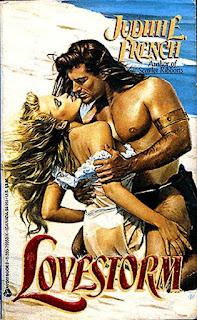
It's a term I've used in the past to mock the romance genre. It comes from an era of romance where the young virtuous ingenue is seduced by the experienced rake. She fights her own desire and, when she gives in, it is often under duress. It's the scenario where she said no but her body said yes. Now I consider that disgusting, it's rape made titillating. It also summarizes the value system of an era where good girls couldn't say yes... and it taught men that no didn't always mean no.

But romance novels did not create this norm, they were a symptom of it. The female readers during this time responded to these books because it was a representation of the social values they were living. Sexual fantasy was just that, fantasy. But the limits on a woman's right to claim her own sexuality was not a fantasy.

These were the romances I started with. In fact, these stories impacted my view about love and sex. I'm still trying to get over that.

Today's romance novels still frequently have an alpha man. The difference between the old school tropes and today's characters is that he's butting heads with an alpha woman. It's a meeting of equals. Unless you are reading a niche book about BDSM or rape fantasy or straight-up porn, mainstream romance is about a woman who is competent and powerful in her own right. She may or may not be virginal. She may or may not be young. Or thin. Or white. Or heterosexual. And there is no concern about whether or not a woman can acknowledge her own desires. If she says no, it's because she means no. And, an equally important shift, she has the right to say yes.

Romance has changed as the writers have changed. While it is still a market with, predominantly, women writing for women, that is not exclusive. A good story is still a good story, and (imo) the only thing keeping the romance genre limited to a specific section of the bookstore and a specific demographic is the prejudice in place against the genre.

(While I could talk at length about the ingrained prejudice against romance based on sexism and the patriarchal norms still lingering that want to limit women's sexual agency, this is a post specifically about the changing face of romance.)

So bodice rippers have had their time and the romance industry has evolved. It's to a point where the term has been reclaimed by the industry in much the same way as racial or homophobic slurs are used by people within the culture to take away the power of the word. We have taken ownership of the insult and know that, as a genre, we are above it.

*Click the image above to go to the BuzzFeed link, "19 Things Fabio Is Actually Thinking On Romance Novel Covers."

Friday, December 22, 2017

Courtly Scandals

Courtly Pleasures is a stand-alone story within a trio of books. Each of these books can be read individually without the reader feeling like they missed an integral part of the story. I, personally, like this about romance. I love getting to know the families and friends of the hero/heroine of a story and then get to see their stories. I love getting a glimpse of the hero/heroine, happy in their life together, during the next novels. It keeps me buying that author again and again because I'm not ready to release that world just yet. And, if I read one out of order, the story is not hurt - it just makes me curious about what came before. In fact, it's fun to see the heroine I loved in book five as a young girl with scraped knees in book two.


COURTLY PLEASURES SPOILER BELOW

When I started writing, I wanted to create a rich world where the readers would want to come back. So far the reviews are strong and I have readers wanting to know what comes next for Frances and Henry. Their love story may have resolved, but the world they live in is continuing. Courtly Pleasures ended at the start of Christmas time. They will spend the twelve days of Christ's Mass at home with their children, Jane, and the goodly members of their household and tenant farms.

Mary made the choice to stay on in London with her previous mistress, Anne Cecil, the Countess of Oxford. Mary is not exactly a servant; she is a gently reared young woman placed in a prestigious household to better her chances of marrying well. As a companion to the lady of the house, she would help with some tasks, but really be there for company. She served Frances in this capacity and now has returned, by choice, to Lady Oxford. Why? Because Mary felt she was needed.

Anne Cecil has recently married the Earl of Oxford and, for her, it was a love match. Although I took some liberties with exact incidences, I tried to stay true to the type of man he was reported to be. As for Mary, I'm not sure what she thinks she can do to make the situation for Anne better, but she's going to, at least, be there for her friend. Whether or not Anne wants her.

Courtly Scandals is Mary's story. It is set over the twelve days of Christ's mass with Queen Elizabeth's court. The cool head and practical nature that was a rock to Frances is useless in the face of unrestrained revelry and Anne's capricious friendship. Mary must adapt and start thinking about herself for once.

While Mary is a fictitious character, both Anne Cecil and her husband, Edward (Ned) Da Vere, the Earl of Oxford, are real. I have portrayed them in their approximate ages and stage of their relationship circa 1572. The image featured to the right is a portrait of the Earl of Oxford, 1575.

If you enjoyed Courtly Pleasures, you will enjoy Courtly Scandals. If you miss Frances and Henry, don't worry, they'll be back again at Holme LeSieur for Jane's story, Courtly Abandon (estimated release date July, 2018).

Courtly Scandals is available for pre-order now. I look forward to sharing the cover reveal with you (I look forward to seeing it myself!).


Wednesday, October 11, 2017

Being a Writer

I am just about to send my edited manuscript back. At this point I'm going over it again and again to see if I missed anything and to clean up the new content.

Receiving the edits made the fact that I'm going to be published finally become real. As I work toward applying the edits, I feel like I'm working toward a real goal. It makes it feel like a legitimate job and not something weird I do alone when I have time.

Writing had become almost a burden. If I wasn't writing then I was giving up. If I was writing, it was hard to justify why I was taking the time to write a story when I could be doing productive things like laundry. I had so many stories in my head, but either the story or the writing had some flaw I didn't understand, something about it that made it not viable. It's hard to motivate yourself to write despite that.

I would tell myself that the fact that I started and finished books was an achievement in itself and I didn't need validation from external sources. While I still felt good about what I had accomplished, I must have needed that validation because it was becoming harder and harder to write.

As I do edits for Courtly Pleasures I can see the finish line on this project. It restores my optimism (or insanity) for my writing and my faith in myself. New stories are percolating. Old stories with kinks are resolving themselves.

I'm excited about writing, about being a writer, again. Of course I'm excited about Courtly Pleasures being published but, more than that, I'm excited about the next story and how it might unfold.


Friday, October 6, 2017

Applying Edits

My experience with the first round of edits was...
Scary? No, not once I got the document. The worst part was the anticipation.
Exhilarating? No, it was just a job I had to do.
Insulting? Not at all. There were changes to be made and I made them. I wasn't offended. I suppose I could have been, but the editor always explained her thought process. Hey, it's all about putting the best version of your book out there and that means honest critique and collaboration.

I received a Word doc full of tracked changes and comments. 90% of my job was to accept the deletion/insertion of the tracked changes. This included a format change here, an 's there, an m dash changed to an ellipses, etc... All little things.

The editor also noted story inconsistencies or times when more explanation was needed. A few new scenes requested, a few scenes deleted. Everything she said made sense to me. None of it was insulting to my word baby or my ego. The challenge for me was to hold the history teacher in me in check when I was asked to explain some of the social norms or the roll of nobles and gentry at Queen Elizabeth's court. I had to severely edit myself to address specific questions.

I was nervous about the edits, but they've been smooth. I understand the expectations and that is more cut and dry than trying to write a book in the first place.

The next step is line edits. I like to think it won't be too messy. I'll let you know.


Monday, September 18, 2017

Receiving Edits (alternatively titled: Holy Crap!)

Over the years I have posted blogs about treating every critique like a gift. Whether or not I agree with the critique, the reader took the time to read my manuscript and give feedback. That deserves gratitude, not argument. It took me years to train myself to put this understanding into action. It is a knee jerk response that, when my book baby is threatened, I must defend it.

Here's the thing: if I have to explain why I did x, y, or z to the reader, then it wasn't well done. I won't have the opportunity to pop my head in to where my reader confused by my creative decision and explain that the scene is an example of my heroine as an unreliable narrator. Beside that being super creepy behavior on my part, it is just evidence of bad writing.

Ergo: Critique = Thank you.

But now I'm at that next stage and have an editor (insert little happy dance here).

I'll be getting my first round of content edits within the week and that could mean ANYTHING. I hope my critique=thank you training will come in handy but, more than that, I hope I can be an educated, professional adult with enough sense of self to make this experience a rational one and not take anything personally. Ultimately, any perceived criticism will be coming from the shared goal to make my book successful.

So bring it on, awesome editor, I can take it like a reasonable person and not be crazy. I think. I hope.

Friday, July 21, 2017

History Happened. Really. So Get it Right.

Allow me to jump back into the blogosphere with a short rant about historical accuracy.

I like writing with historical settings. I have written fantasy and struggle with consistency. I have to draw maps and create cultures and magical systems and naming traditions. When writing with a historical setting, it's all been done for you. Thank you, people who came before, for laying it out for me.

That said, research is required. No matter how much I think I know, I am constantly second guessing and double checking. Whatever the era, there is a plethora of resources available (online, for free!) to help fine tune the details of your novel. You don't want to fudge because you lose credibility as a writer, no matter how great your story may be.

The following points stand out to me both as a reader and a writer.

1. Language
When writing a story set within the Elizabethan Era, I found myself looking up the word Machiavellian. Certainly Machiavelli had existed and been published prior to this time. But even though the educated may have read his work, would his name have been equated with the theme of his writing? No. It's a more modern term and would be inappropriate to use. Word choice matters when it comes to making your setting real. I just read something set in early Victorian where they used the word "perp" in reference to the bad guy and it broke me out of the story completely.
To become comfortable with the word use of your chosen era, read work (primary sources) from that time. If you are uncertain, Wikipedia is a decent and easy resource to double check (I once looked up "cunt" because I wanted to confirm period crude slang for that particular body part. The table full of youth pastors meeting behind me became suddenly silent when it popped up in 100 pt font on my screen. Good times.)
Whether or not you choose to write in dialect (I did originally, but then an acquiring editor at Avon told me to nix that), make certain the speech patterns are consistent with the era, the class, and the setting. Consider period slang, contradictions, and forms of address while still making the dialogue accessible to the reader.

2. Names
I have found church records for marriages, baptisms, etc... from the years I write online. Even if you cannot find direct resources of the names of commoners, looking at the names of the royal families of  will tell you the trends of the time (people tended to name after the people in charge in homage/butt kissing). Depending on your era, historically people were not creative in the name department. Even today there are some countries that have lists of approved names. Learn about the culture of your setting. Are sons named after fathers? Do children take their mother's maiden name as a middle name? Does their birth date figure in to their naming (saints days)?
This can be frustrating because it limits creativity OR it could be a relief that you don't have everything to choose from. I've seen many authors nod to historical naming with the character's given name and then play with nick-names. Personally, I'd rather read about a real guy with an old fashioned name like Edwin than an archetype who goes by Rogue (just in case we didn't understand the archetype)

3. Norms
This is the biggest challenge for me. You want to write something historically accurate that the modern reader can relate to. If your main character is a woman (and mine always is) you have to be careful not to give her modern thought processes. Women's rights were limited but for a woman in that era, that would be all she ever knew and would be, if not content, at least resigned to her lot in life. Depending on the era you are writing there are very specific thoughts about religion, ethnicity, and class systems. Modern readers may see oppression or racism or elitism while the historical characters see it as the way of their world. How you write it will make all the difference. For the historical characters, these aspects of society were normal but can be off-putting for a reader. Finding the balance between historical views and modern sentiment is tricky. Have fun with that.
Being consistent with social norms extends to casual interactions, introductions, conversations public and private, forms of address, seating at the table, manners, class distinctions, etc... It's the biggest aspect of historical setting and what gives the read a feel of authenticity.

4. Costumes
Again, as with norms, it's hard to make historical fashions something the modern reader can comprehend. People have preconceived images of what is attractive now and it's hard to merge modern aesthetic values the historical. Consider your characters from the skin outward, being sure to include their undergarments (or lack thereof) and the correct names for the items. I read a book where the corset was referred to as a busk (a busk is the solid, removable insert in the center front of an early corset). It may be sexy by today's standards to have your heroine forgo her chemise beneath the corset, but consider that the chemise protects the outerwear from sweat and the skin from the coarse, heavy, boned corsets. Research. Look at portraits from the era, look at patterns for construction, and read about the way the garments would have been worn. You can find primary source fashion plates but many of the reenactor websites can be a good resource (they take their attention to accuracy very seriously).
I have to be careful not to make my books a treatise on historical costuming because I love the details. I end up trimming my descriptions down to the bare minimum. I want the reader to picture the character in the gown and how she feels, the impression she leaves, rather than the pleating at the waistband or the embroidery on the shoulder epaulets. It's actually hard for me, but no one wants pages and pages of dress description, they want the story. The dress only matters in how it furthers the character and plot, but it should be accurate.
One positive in understanding all the layers and the way they fasten is that it will help you also undress your character later. :)
The only area where (my personal feeling) it's okay to deviate from historical accuracy in costuming is in the area of hygiene (especially if your work is sexually explicit). Enough said.

1751 Countess of Coventry
A renowned beauty

Ultimately the story has to take dominance over all these details, but working in the true flavor of your chosen era will make the story richer and let the reader truly immerse themselves in your world. Granted, not every reader knows whether or not cotton would have been worn by medieval Scottish peasants (it wouldn't have) but you still owe them accuracy rather than hoping no one will care/notice. It's your name on the cover and your credibility at stake.

You may be asking what gives me to right to lecture on attention to detail in historical romance. If you don't want to take me seriously as a writer (I get that), at least consider this from a reader's perspective. I never read another book by the author that called a corset a busk.


Related Posts Plugin for WordPress, Blogger...

Pages